




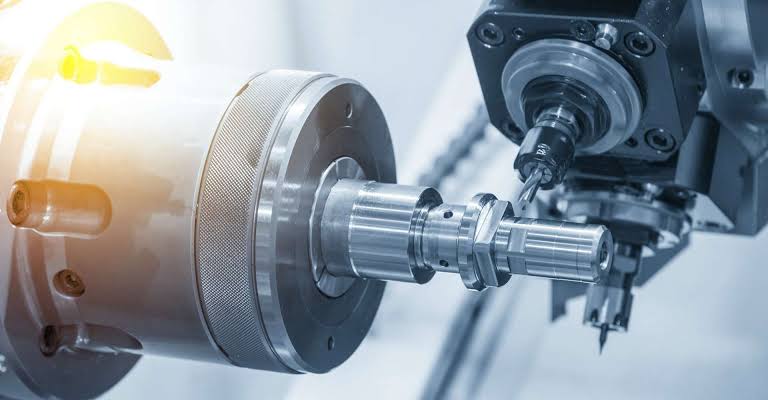
Modern production demands components that maintain tight dimensional control while supporting increasingly complex requirements. Each stage of fabrication influences overall stability and shapes how reliably the final structure performs. The adaptable production flow gains measurable value as precision machining vietnam elevates consistency across complex builds. These qualities strengthen the expectations placed on advanced manufacturing teams seeking dependable outputs.
How Do Precision Methods Ensure Reliability?
Reliability begins with controlled operations that shape metal with predictable refinement. Each adjustment supports dimensional accuracy while maintaining balanced transitions between forming steps. These methods guide how precisely the part behaves under varied conditions. Careful coordination ultimately determines whether each component performs as intended within demanding systems.
Engineered Processes Strengthening Metal Output
Focused development strategies encourage smoother refinement as teams enhance machining depth for tougher applications. These coordinated improvements support dependable shaping results that withstand varied operational conditions.
Material Preparation Essentials
- Surface alignment improves initial contact stability
- Cutting orientation influences edge integrity
- Heat dispersion shapes overall form balance
- Structural density affects shaping behavior
Dimensional Refinement Techniques
- Angle consistency protects final geometry
- Feed adjustments support tighter control margins
- Fixture accuracy stabilizes shaping transitions
- Tool positioning maintains uniform edge definition
These deliberate enhancements help ensure that each processed section maintains uniform structure and supports additional finishing steps with dependable precision.
What Drives Component Accuracy Today?
Accuracy is shaped by decisions that support balanced transitions between each refinement stage. Designers prioritize measurable consistency throughout shaping cycles to maintain predictable metal behavior. Tightened control creates improved harmony between forming patterns and final demands. These combined efforts form the basis of trusted industrial results guiding wider applications.
Integrated Techniques Supporting Performance Goals
Refined strategies support improved performance by linking controlled tooling movements with steady shaping sequences. Each coordinated transition influences how cleanly the material responds during the cutting phase.Refined calibration techniques create smoother transitions as precision machining vietnam reinforces the accuracy expected in advanced component shaping.
Sequential Adjustment Factors
- Tool angles determine directional shaping flow
- Spindle patterns support smoother motion control
- Retention grip strengthens metal position during passes
Stability Enhancement Measures
- Depth pacing protects delicate structural zones
- Cooling balance minimizes heat-driven distortion
- Reinforced hold points create consistent shaping steadiness
Together, these elements contribute to controlled refinement that supports evolving performance requirements across demanding industrial expectations.
Can These Solutions Improve Your Results?
Yes, these solutions can improve your results by supporting more consistent shaping behavior during critical fabrication stages. Each refined adjustment gives teams clearer visibility into how the component responds within varied conditions. This added clarity helps simplify certain decisions while reducing avoidable alignment issues.
Evolving Standards Shaping Industrial Quality
Quality expectations continue shifting as industries pursue stronger alignment between dimensional control and operational certainty. These developments push teams to adopt approaches that emphasize balance, predictability, and refined sequencing. As these standards grow, production groups refine their methods to deliver parts that satisfy expanding engineering expectations across modern applications.