



As the world transitions into renewed energy, the demand of lithium has risen in popularity. This lightest of all metals sits at the center of rechargeable batteries powering electric vehicles, smartphones and renewable energy storage systems. As demand increases year-on-year, more and more people have been wondering what lithium mining actually is. It’s not nearly that simple − and the processes used vary based on where the lithium comes from.
What is Fueling the Rapid Growth of Lithium Mining?
Lithium has become an indispensable component in the worldwide race toward electrification. It does weigh nothing though and it does pack a lot of energy in, so it is something battery makers are reliant on. This has led countries and big businesses to scramble for supply. Such a rapid expansion has brought mining for lithium to the forefront of discussions on both its potential and its downsides.
Where Lithium Comes From
Not all lithium is extracted in the same way. Instead, we find it as two major lithological facies:
- Saltwater brine reservoirs
- Hard-rock mineral deposits
These sources influence how it is extracted.
Extracting Lithium from Brine
In arid regions such as Chile and Argentina, brine extraction is the normal. Saltwater high in lithium and other minerals is found beneath the desert floor.
Brine Extraction Process
- Brine is then pumped to surface by way of deep wells.
- The brine is distributed in large evaporation ponds.
- The process of sunlight evaporating the water lasts for months.
- Lithium is then isolated and extracted as minerals become enriched.
It is an energy-efficient but time-consuming technique that utilizes natural evaporation. It does have large water needs which raises environmental concerns in arid areas.
Extracting Lithium from Hard Rock
In Australia, for example, lithium is contained in the mineral spodumene. Mining lithium in this way is more straightforward but also considerably more industrial.
Hard-Rock Extraction Process
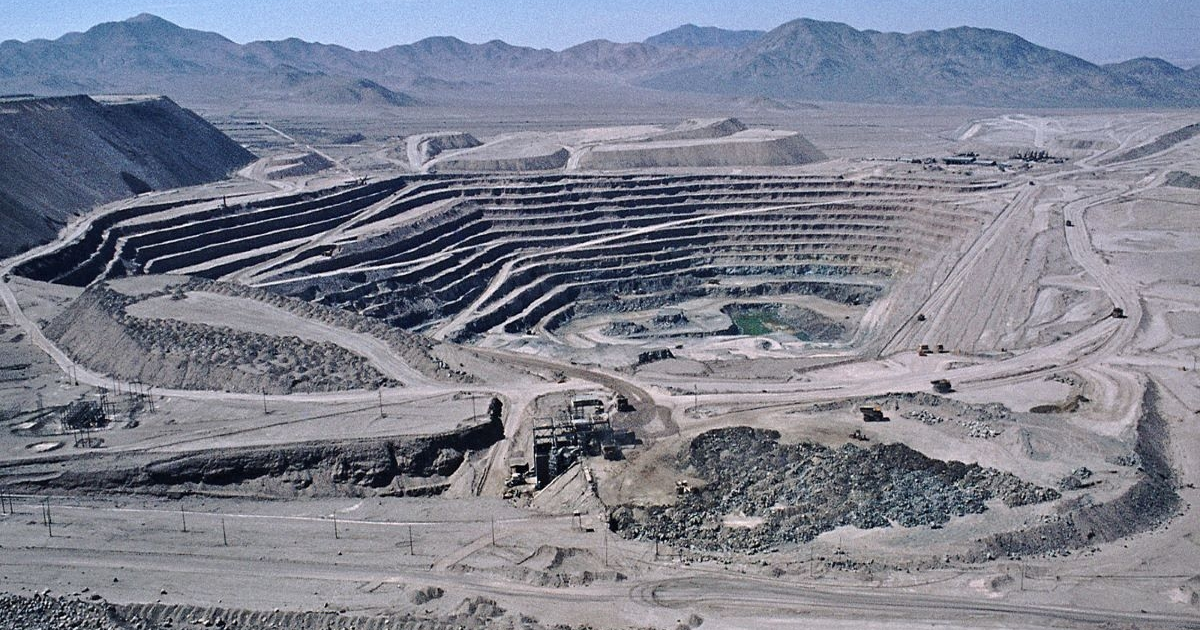
- Open pit mines take out tons of ore.
- This involves breaking the ore down into smaller pieces.
- High-temperature heating modifies the structure of the minerals.
- This is where lithium is getting chemically processed and isolated from the rock.
- The end product is a lithium rich concentrate suitable for extraction.
Compared to brine extraction, hard-rock mining is quicker and less reliant on climate, though it is more energy-intensive.
New Innovations: Direct Lithium Extraction
More recently, a newer method −- Direct Lithium Extraction (DLE) − is drawing interest. Unlike vaporization, DLE uses innovative materials that actually extract the lithium from the brine.
Why DLE is Promising
- Faster production
- Smaller land footprint
- Potentially lower water usage
Currently, it is in the pilot stage, but it can be critical for lithium mining activities in the future.
Sustainability Needs Balance
While lithium reinforces clean energy technology, the extraction is not without its costs. Concerns include:
- Frequent brine areas are high water use
- Land disturbance from hard-rock operations
- Waste generated from chemical processing
However, these challenges are encouraging the pursuit of sustainability and greater lithium reclamation.
Final Thoughts
Mining lithium is a complex and in flux global involved industry system driven by global demand and technology advancements. Lithium, from wherever it is drawn − the brine pools described here, hard-rock ore, or novel direct-extraction systems − is crucial to the world that is in transition to cleaner energy. Striking this balance between supply and sustainability will surely help to define the future of energy storage as the industry expands even further down the road.