




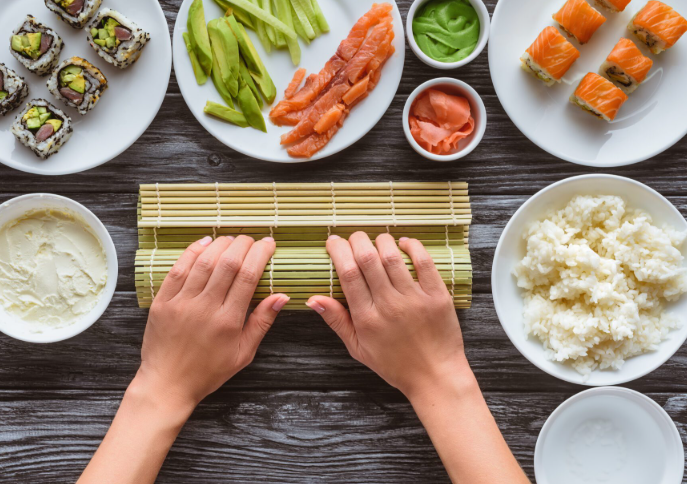
A seemingly simple slice of raw fish on a bed of rice or neatly wrapped in seaweed. Under this apparent simplicity, there lies a world of intensely technical and precise artistry. The sushi is not merely a dish; it is a craft perfected over centuries, with all movements, ingredients, and details holding meanings. To understand sushi is to appreciate the efforts and skills necessary to convert basic raw food ingredients into edible art.
The Art of Minimalism
Sushi is really special in that it is minimal. It uses only a few materials: rice, fish, seaweed, and seasoning. Sushi depends on balance and harmony. Each piece must be very well-made. The rice, or shari, is the first thing. It must be just the right stickiness, taste, and temperature. The fish, or neta, must be impeccably fresh and very precisely sliced to achieve the right texture and look.
The knife work of the sushi chef is a discipline in itself. Generally, the years of practice are needed in order to know how to slice correctly every variety of fish — a fine stroke for tuna, a clean cut needed for squid, and so on. Each blade measures the way that fish will rest on the rice, its feel on the tongue, and how flavor is released.
Becoming a Sushi Master
In Japan, becoming a sushi chef, or itamae, is basically a lifelong profession. Severely long apprenticeships might include washing rice and cleaning stations, never even handling fish. “Itamae” usually spends years observing masters, learning not only techniques but also philosophies in the craft.
Patience, discipline, and respect are the three basic tenets of sushi-making. An itamae learns the rhythm of the kitchen, the seasonality of ingredients, and the nature of interaction with customers. The moment itamaes are placed behind the counter, every stroke from shaping rice to plating becomes a ceremonial, highly practiced action.
Harmony of Flavor and Form
The beauty of sushi, however, lies in its harmony. Each – taste, color, shape, and presentation – is balanced. Even the sequence in which sushi is served is considered, as it often moves from lighter to richer flavors to complete a dining experience.
In the hands of a worthy sushi chef, food could be thought to be an ongoing conversation between nature and technique. Every piece is a result of years of mastery and definite scruples in the treatment of materials. Culinary art form “Beyond the Roll.” This is sushi art that embodies precision, balance, and emotion. Eating is not just an act; it’s up close to craftsmanship at its finest. Each morsel of sushi is itself a masterpiece built with care, tradition, and soul.
This post was written by a professional at Suhi Inc. Sushi Inc. is a vibrant restaurant that offers what is considered the most authentic sushi in downtown St. Petersburg. Opening its doors in 2013 and becoming a local staple by offering live music, traditional hand-rolled sushi and a friendly atmosphere, our guests always have a top-notch experience. Customers love our award-winning, fresh and creative Sushi rolls, Nigiri, and Sashimi. With a larger selection of tempura, non-Sushi, and teriyaki options, we can accommodate every taste.


